Hand and Arm Contractures: What Causes Them and How Are They Treated?
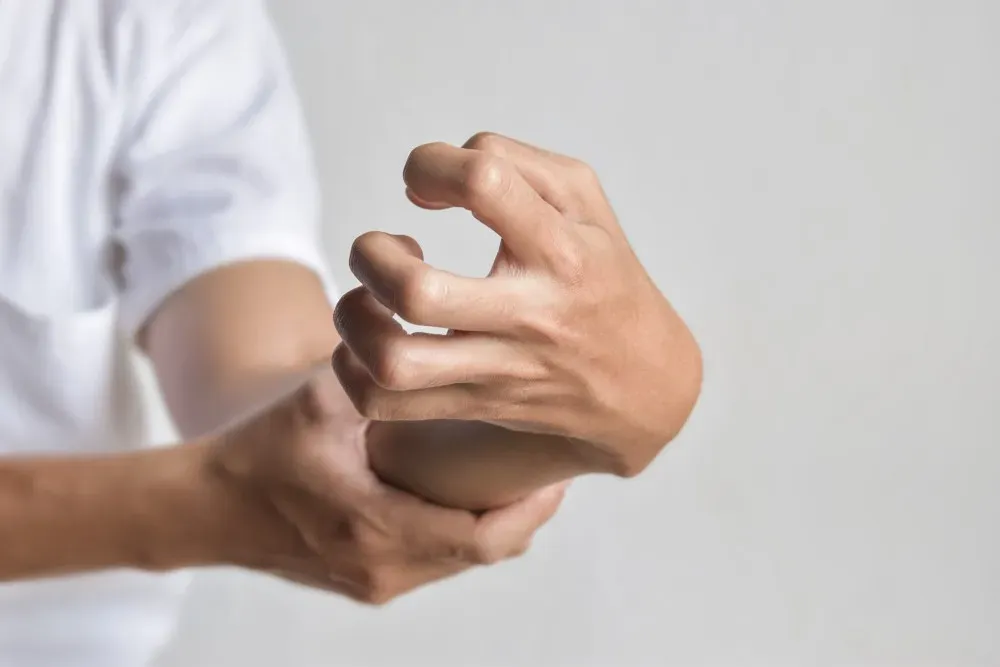
If your fingers curl inward or your wrist stays stiff and hard to move, you may be dealing with a hand or arm contracture.
At Sequoia Institute for Surgical Services, we help people understand what may be causing stiffness and limited movement in the hand or arm and explore treatment options that fit their needs.
Our experienced hand surgeon, Dr. Jonathan Liu, provides personalized care for complex hand conditions. We serve patients across Central California with offices in Porterville, Selma, Visalia, and Tulare, California.
A contracture occurs when the normally stretchy tissues in your hand or arm tighten up. This makes it difficult or impossible to straighten your joints. Some contractures need treatment sooner than others. Dupuytren’s contracture, for example, may simply be monitored until it begins to interfere with hand function.
What causes hand and arm contractures?
Contractures develop when inelastic, rigid tissues replace elastic tissues. This process can happen for several reasons.
For some people, contractures develop after neurologic conditions such as a stroke or spinal cord injury. Limited movement, weakness, changes in muscle tone, and changes in the surrounding tissues can all play a role.
Physical or occupational therapy, positioning, range-of-motion exercises, and other strategies may help maintain movement and manage stiffness.
Other contractures are structural. Dupuytren's disease causes thick, fibrous cords to form in your palm, slowly pulling your fingers forward. Old injuries, severe burns, or fractures can also leave behind tight scar tissue that binds your tendons.
At our practice, we evaluate your specific symptoms, medical history, and hand function to determine what may be contributing to your stiffness.
What are your nonsurgical treatment options?
If we catch joint stiffness early, nonsurgical therapies can be highly effective. We often recommend targeted physical therapy and custom orthoses to keep your tissues flexible.
Splinting may also be part of treatment. Depending on the type of contracture, clinicians may use braces or splints along with therapy to provide prolonged stretching or help maintain joint position. Dynamic bracing is one option for some established contractures, while heat may sometimes be used to make stiff tissues easier to stretch.
When is surgery necessary for a contracture?
When a contracture becomes rigid and structurally fixed, conservative treatments are no longer enough. In these cases, procedural or surgical intervention is the best path forward.
For Dupuytren’s contracture, treatment may include injections or procedures that release or remove the tightened tissue. In a 2024 randomized trial of 302 people, treatment success at two years was 78% after surgery compared with 65% after collagenase injection. Outcomes were similar at three months, but the surgery group maintained a higher success rate at two years.
After a tendon injury or repair, scar tissue can sometimes keep a tendon from gliding normally, limiting active finger movement.
A 2026 retrospective study followed 31 people who underwent flexor tenolysis after previous tendon repair. Motion improved after surgery, although the gains were generally modest, and about half of the treated digits had good or excellent outcomes. Flexor tenolysis releases adhesions around a tendon when movement has stopped improving despite appropriate rehabilitation.
If hand or arm stiffness is interfering with everyday activities, our team at Sequoia Institute for Surgical Services can evaluate what may be causing it and help you understand your treatment options. To explore your treatment options, schedule a consultation with us at one of our offices in Porterville, Selma, Visalia, or Tulare today.